


November 2, 2026
Could modular housing be part of the solution for families in temporary accommodation?
Darren Alexander
Across London and the rest of the UK, local authorities like Havering are facing severe temporary accommodation pressures, with record numbers of homeless households residing in hotels and hostels. The evidence is clear that prolonged stays in often cramped, non-self-contained spaces compromise family health and children's education while also placing a heavy financial burden on council budgets. London Councils estimate that the cost of temporary accommodation in London now runs at close to £2bn a year, with 79% of total expenditure directed to the most expensive nightly paid form of accommodation. Like many councils, Havering continues to face significant challenges in securing sufficient suitable temporary accommodation.
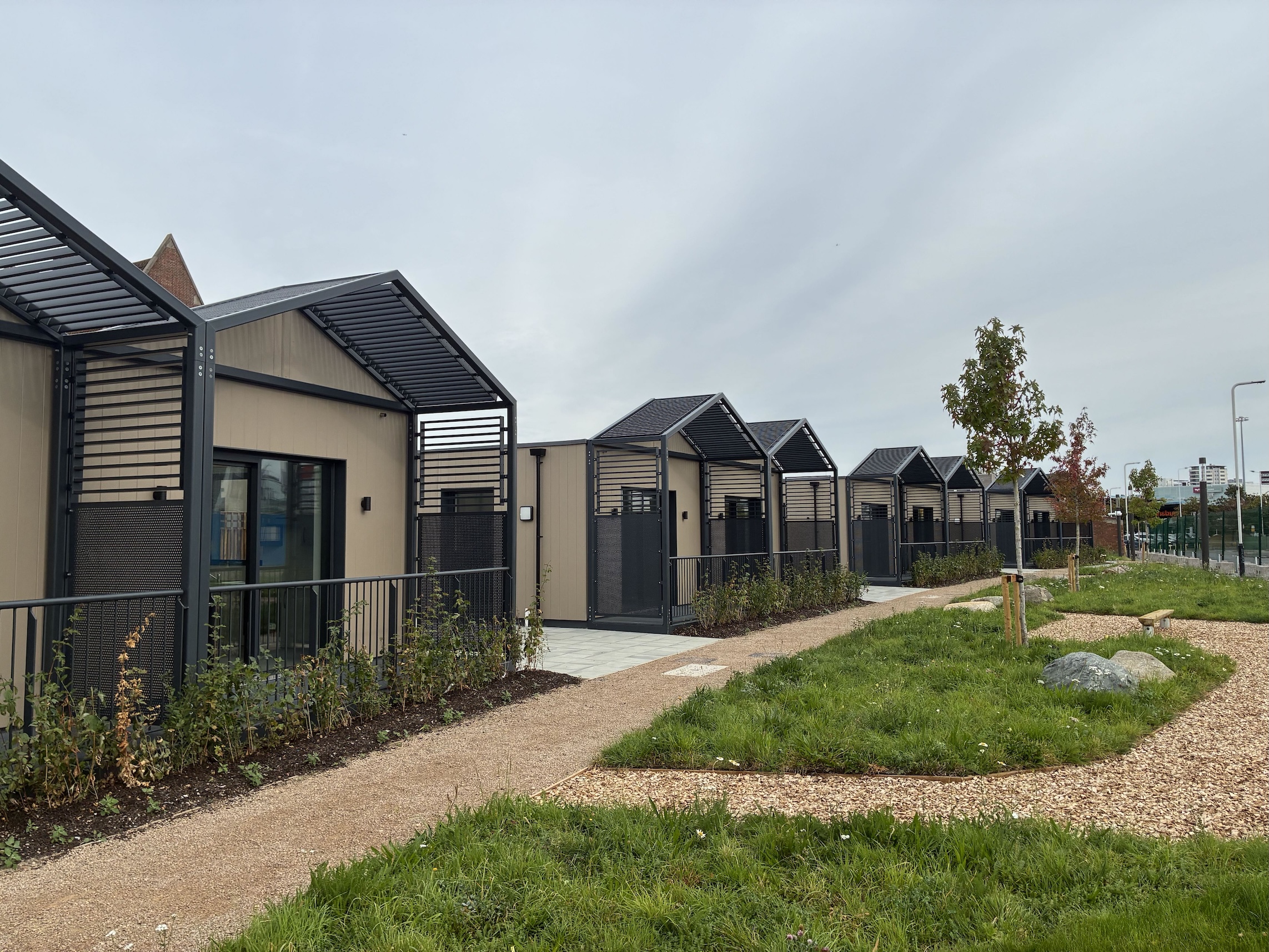
To help us address this challenge, here at Havering we have worked with our strategic development partners at Wates Residential and HTA Design LLP to develop high-specification modular housing in Romford town centre as a dignified, cost-effective alternative to emergency temporary accommodation placements. The site provides 18 factory-built modular homes (14 two-bedroom and 4 three-bedroom units) for 18 families and 42 children who previously have spent an average of 2.5 years in hostels and other forms of unsuitable temporary accommodation. These self-contained units include full kitchens, private bathrooms, dedicated living rooms, balconies or gardens, and secure storage space. Resident feedback highlights that separating living and sleeping areas while providing private laundry and cooking facilities supports stability, enables children to study, and improves overall family wellbeing while awaiting permanent housing.
Seeing the excitement of the families viewing and signing up for their new accommodation was a feel good moment for sure, but beyond this there is also a hard-edged business reason for us in developing the modular homes. Escalating expenditure on nightly paid emergency accommodation provides no long-term asset value to local authorities while significantly straining budgets. Modular housing can offer a viable 'spend-to-save' model, with off-site volumetric manufacturing allowing for rapid site assembly compared to conventional construction. By utilising council owned land awaiting long-term regeneration - such as the final phase plot of the Waterloo and Queen Street estate, which will not begin construction for five to six years - we have maximised the efficient use of underutilised land.
Our modelling suggests that we may be able to recoup much of the capital investment within three to five years through reduced reliance on hotel and nightly-paid accommodation. Built to durable standards and designed to be demountable, these units can also be relocated to future ‘meanwhile’ sites across the borough as regeneration projects progress. With other sites under development, we can offer much better quality accommodation to even more families in need.
As is the case for many of us working in housing needs, developing this type of housing solution is outside of the usual skillset and presents something of a steep learning curve for those working in Housing Needs. Some local authorities have explored modular housing as a potential solution in the past but have worried about the ratio of costs to benefits, found the supplier market difficult to navigate, or been concerned about the quality of the modular units of five years ago. Happily, the quality of modern modular units has improved considerably and so has confidence in this method of construction as a temporary accommodation option for both single people and families, and here in Havering we are keen to share our real world experience of developing this scheme to help illuminate the development process and demonstrate what can be achieved.
Successfully implementing modular housing requires strategic clarity, political support, rigorous analysis, and cross-sector collaboration. Partnering with developers like Wates Residential who were able to bring experience from having developed similar housing in Wales and elsewhere was very important for us. Engaging with research bodies such as the Centre for Homelessness Impact will help us to establish a robust framework to evaluate resident outcomes, cost-effectiveness, and operational feasibility. By combining rigorous evidence, shared operational learning, and careful site selection, local authorities can deploy modular housing as a scalable, high quality, and cost-effective component of their broader housing strategies.
But above all else, knowing that 42 children now have somewhere safe to play, do their homework, and sleep separately from their parents, is for me the best thing of all.
- Darren Alexander is the Assistant Director of Housing Demand, London Borough of Havering


