


June 18, 2026
From Hostels to Homes
Michelle Binfield
Hostels have long been a core part of the sector’s crisis response to homelessness. Many of us have worked in or managed them, trying our best to make them work for people whose needs are often far more complex than the buildings or the model were ever designed for. And while hostels continue to provide accommodation and support for many, evidence suggests that the traditional hostel model struggles to deliver the outcomes people need, and often fails to provide conditions for recovery.
The Centre for Homelessness Impact’s What is a Hostel in 21st Century Britain report (2025) highlights this starkly. Across the UK, hostels accommodate a far wider range of people than they were commissioned to support - including individuals with acute mental health or substance use needs, young people, and people whose care needs would be better met in more specialist provision. This “all things to all people” role stretches staff ability to offer good recovery-based support and makes the living environment challenging for everyone.
The report also shows that many hostels record high levels of abandonments and evictions, and slow, inconsistent move‑on into settled housing. People often stay far longer than intended, not because the model is meeting their needs, but because no suitable move-on options exist. Hostels have become long‑term accommodation by default, rather than by design.
Research over the past decade reinforces these findings. Large, shared, transitional accommodation is associated with poorer outcomes than models offering privacy, permanence, and control. Studies from the UK1, Europe23, and North America4 highlight the same themes: self-contained, stable housing supports recovery and people with high support needs often struggle in settings with little autonomy and limited stability. Hostel providers know this instinctively - because they see it every day.
None of this reflects a lack of effort from providers. Hostel teams work with dedication and skill, often in buildings that are outdated and unsuitable for the level of need people arrive with. Staffing shortages, funding pressures, and the lack of support from health and care services means that needs are being managed in settings where specialist input is either missing or insufficient and where providers are asked to deliver psychologically informed, recovery‑focused support in environments that undermine those very principles.
It has never seemed more obvious that, if we want to improve outcomes, we need to change the model, not just the practice. The Housing First evidence base is well established, but while the strongest evidence is linked to scattered‑site models, there is a growing recognition that congregate Housing First may also be effective for people with high and enduring support needs. With some international studies suggesting that congregate Housing First can serve to reduce loneliness, increase stability, and improve engagement with support, particularly for people who value community and proximity to staff.
I know from my own experience of working in and managing hostels that not everyone wants, or feels they will thrive in, their own flat. Some people prefer communal living, as long as it is safe, offers privacy, and genuinely feels like their home. Models that combine fully self-contained units with on‑site support and shared community spaces can offer the best of both worlds: privacy and connection.
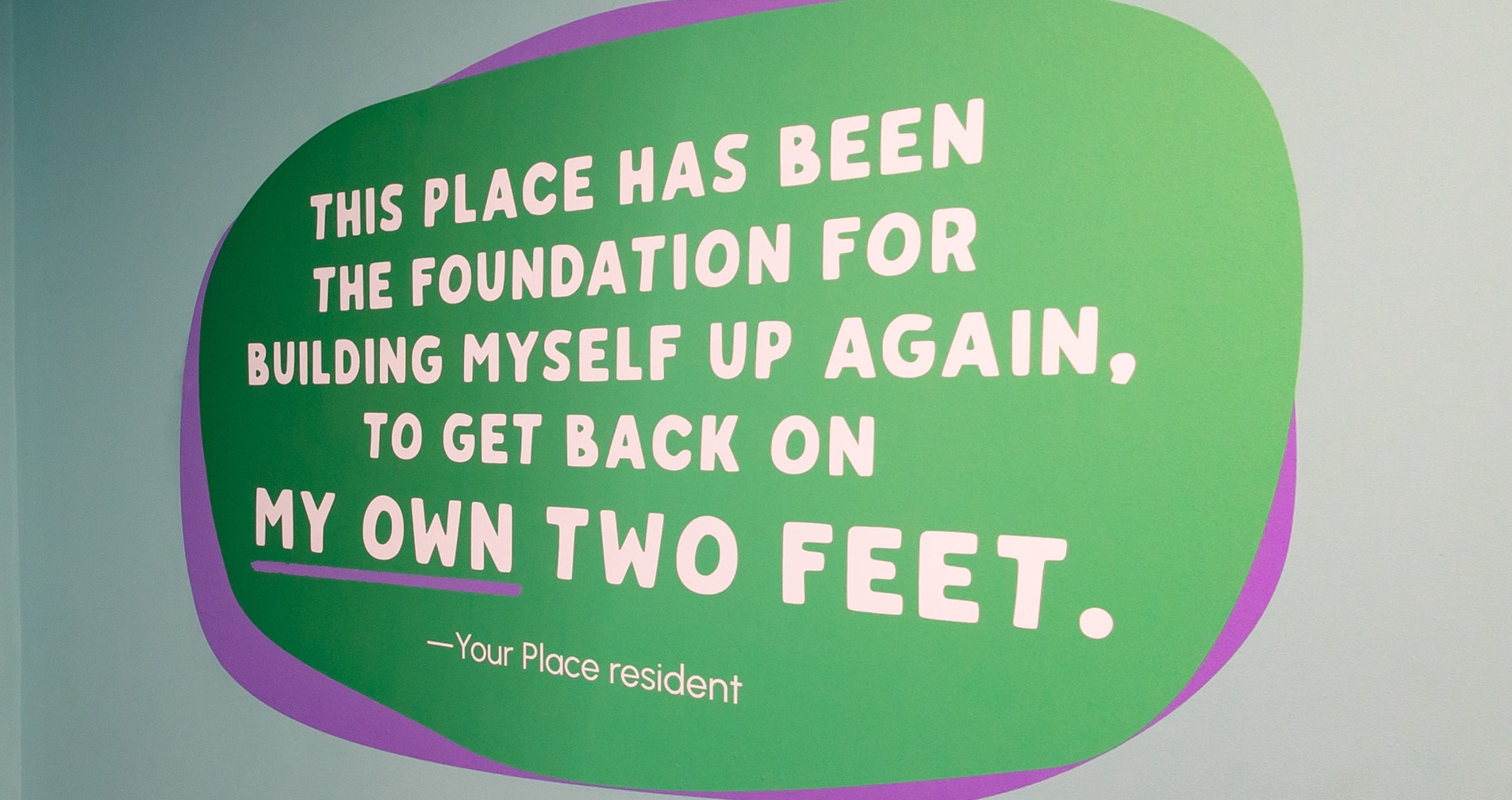
We are already seeing what this looks like in practice. Your Place’s CEO, Amanda Dubarry, has overseen the radical transformation of a traditional hostel building into London’s first congregate Housing First scheme, offering self-contained long-term housing to 23 people with past experience of rough sleeping. The Harbour Project is funded by the Greater London Authority and opened in May 2025. Those moving in are given assured shorthold tenancies and a fully self-contained flat, with the added benefit of communal space, optional activities and staff on-site.
This project resulted from qualitative research undertaken by London Councils that revealed a significant minority of hostel residents (estimated at around 10% by London hostel providers) were overstaying because the best-suited move-on option (long-term congregate housing with support) was unavailable.
While this project has not yet been evaluated5, Amanda feels the early signs are very encouraging:
“Since that part of our services moved from short-term hostel provision to long-term homes with wrap-around support, we’ve seen a real change in how people think about their future. The added stability has helped people feel safer, more settled, and more able to make decisions that work for them.”
She also highlights the impact on staff:
“Our team now have more focus on the kind of work that they came into this sector to do. Instead of managing the turnover that comes with short-term provision, they’re able to spend more time developing relationship-based care and supporting people to build the kind of lives they want in the long-term.”
And the impact on residents:
“People tell us they feel calmer and more hopeful. For some, it’s the first time they’ve had a place that truly feels like home. And it’s showing up in unexpected ways … reconnections with family members after years apart and people who hadn’t felt work-ready using their new feelings of stability as a platform for training and employment.”
A new Places of Change6 or Hostels Capital Improvement Programme could scale this, providing the impetus and the capital to support more wholesale change across the system, turning the right hostels into permanent homes and giving people what they need to thrive: stability, autonomy, community, and support.
Because after decades of working in hostels, for people like me and Amanda, one conclusion is hard to avoid … people don’t need better temporary accommodation. They need homes.
Michelle Binfield is an Associate at the Centre for Homelessness Impact
- Homeless Link. (2025) More Than a Roof: Three‑Year Outcomes from Housing First in England. London: Homeless Link.
- Pleace, N., Culhane, D., Granfelt, R. & Knutagård, M. (2015) The Finnish Homelessness Strategy: An International Review. Helsinki: Ministry of the Environment
- Y‑Foundation. (2017) A Home of Your Own: Housing First and Ending Homelessness in Finland. Helsinki: Y‑Foundation.
- Larimer, M. et al. (2009) Health care and public service use and costs before and after provision of housing for chronically homeless persons with severe alcohol problems, JAMA
- The Centre for Homelessness Impact is working with the GLA to design an evaluation of the model/project.
- Randall, G. & Brown, S. (2007) Steps to Independence: Evaluation of the Places of Change Programme. London: Department for Communities and Local Government (DCLG)


