
Interrogate the evidence, find what works
Try it →


We collaborate with academics, universities, and research groups to uncover what really helps people out of homelessness. Explore our growing body of work that includes randomised control trials, systematic reviews, policy papers, and books which help to fill the gaps in our understanding of homelessness.
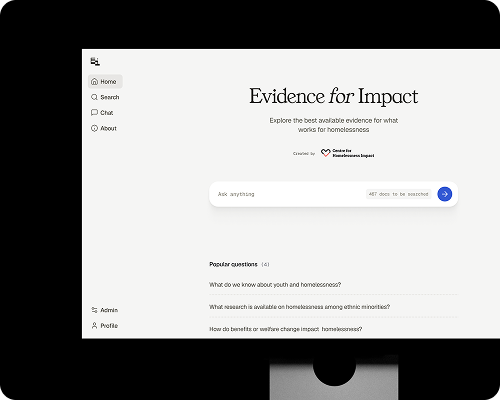
Evidence for impact is our new platform that makes the growing evidence base on homelessness easy to explore and understand. Interrogate the evidence, work through key questions, and act on what works to prevent homelessness. Bring trusted research directly to your decision-making, today.
September 18, 2026
Published in the International Journal of Epidemiology (September 2026), this landmark systematic review and meta-analysis provides the clearest global picture yet of the relationship between homelessness and mortality. Led by researchers at Cardiff University and University College London, the project searched four primary databases through December 2024 and supplemented published findings with unpublished cohort data. In total, the study synthesises 116 studies involving 2,563,633 people with experience of homelessness and 129,292,553 controls — representing the largest evidence base ever compiled on this issue.
Read more.png)
July 29, 2021
A policy paper in collaboration with Sheffield Hallam University's Centre for Regional Economic and Social Research exploring gender-based approaches to homelessness policy.
April 30, 2021
A survey conducted in partnership with Ipsos MORI
April 8, 2021
Two randomised controlled trials undertaken in partnership with The National Residential Landlords Association and the Behavioural Insights Team.
March 18, 2021
The updated 2021 edition shows 275 studies on why interventions to improve the welfare of people experiencing homelessness or at risk work or not.
January 29, 2021
The Centre for Homelessness Impact’s inaugural impact report, detailing the impacts and achievements from our first two years of work.
December 21, 2020
Results from a survey conducted by Ipsos MORI for the Centre for Homelessness Impact on public perceptions and attitudes towards issues relating to homelessness.

October 29, 2020
Accommodation-based programmes for individuals experiencing or at risk of homelessness.

October 13, 2020
This report is the third edition of the report which presents the findings from the first of these maps, that is the evidence and gap map on effectiveness. This edition includes 134 additional studies, bringing the total number of studies included in the map to 394. It also includes a network analysis of study authors and their home institutions.


