
Interrogate the evidence, find what works
Try it →


We collaborate with academics, universities, and research groups to uncover what really helps people out of homelessness. Explore our growing body of work that includes randomised control trials, systematic reviews, policy papers, and books which help to fill the gaps in our understanding of homelessness.
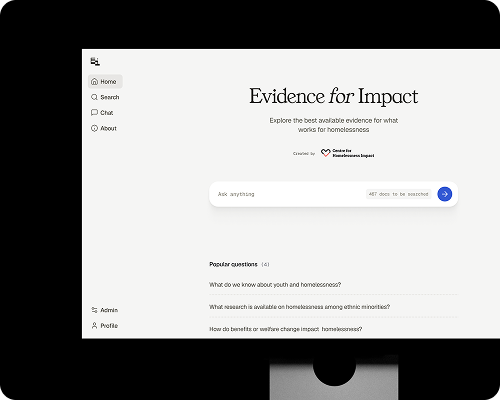
Evidence for impact is our new platform that makes the growing evidence base on homelessness easy to explore and understand. Interrogate the evidence, work through key questions, and act on what works to prevent homelessness. Bring trusted research directly to your decision-making, today.
September 18, 2026
Published in the International Journal of Epidemiology (September 2026), this landmark systematic review and meta-analysis provides the clearest global picture yet of the relationship between homelessness and mortality. Led by researchers at Cardiff University and University College London, the project searched four primary databases through December 2024 and supplemented published findings with unpublished cohort data. In total, the study synthesises 116 studies involving 2,563,633 people with experience of homelessness and 129,292,553 controls — representing the largest evidence base ever compiled on this issue.
Read more.png)
December 11, 2025
As part of our deep-dive research study on the interaction of the criminal justice system and the homelessness and rough sleeping systems, this light-touch evaluation of the Accommodation for Ex-Offenders programme (‘the programme’) was undertaken.
December 11, 2025
This Systems Wide report focuses on how local social housing allocation policies and practise affect homelessness, drawing on qualitative insights from across England. It identifies structural barriers, such as limited housing stock, and discusses how the use of affordability and qualification checks can prolong homelessness for vulnerable groups
September 19, 2025
This report summarises phase 1 of the Personal Grant trial: a one-off cash transfer given to people with recent experience of street homelessness.
July 29, 2025
Homefinder UK (HFUK) is a national housing mobility scheme designed to help individuals and families who are at risk of homelessness—or already experiencing it—voluntarily move out of high-cost, high-demand areas (like London) to lower-cost, lower-demand areas across the UK.
July 17, 2025
Also known as the ‘why things work or not’ map, the Fifth Edition of the Implementation Map looks at qualitative evaluations concerning homelessness interventions. The latest edition showcases 840 studies – including 62 new evaluations from across England, Scotland, Northern Ireland and Wales, bringing our total UK-specific evidence to 213 vital pieces of the puzzle.
June 26, 2025
The Mockingbird Family Model (MFM) is delivered in the UK. The model aims to change the structure of fostering services, by creating a ‘hub and spoke’ model of foster carers, where a hub foster carer can offer support for the network of foster carers around them. This aims to create an ‘extended family’ network for young people in care - giving them somewhere to go if they have a disagreement with their foster carers, allowing them to be part of a wider network of young people in care, and meaning that even after they leave care they have a wider network of relationships that they could turn to for support.
June 19, 2025
This systematic review gathers evidence on the experiences of adults experiencing homelessness when accessing psychosocial interventions. This review was based on CHI’s Implementation Evidence and Gap Maps, supplemented by an additional search.
June 19, 2025
The effectiveness of psychosocial interventions for reducing problematic substance use, mental ill health, and housing instability in people experiencing homelessness in high income countries: A systematic review and meta‐analysis.


